
As other retirees have said before me, I don’t know how I ever found time to work! Truth is, I’m not good at having nothing to do, so need to keep busy – probably why I’m involved in so many projects! So, having a bit of a gap between these, and before the fishing properly gets going, I thought it was time to put finger to keyboard, and let you know I haven’t forgotten you!
Migrating fish
Fishing-wise, I haven’t done a lot this year yet. But Spring has sprung, the blackthorn is flowering, and hopefully the recent equinox spring tides will have brought some of the big migrating fish in. If the weather and tides permit, I’ll be putting in some time on favoured estuary spots – I’ll leave the coast until July, when the fishing usually gets more consistent.

This decision is shaped by a growing preference for fishing in estuaries, which itself is linked to increasing age, and balance issues. That said, I will always enjoy fishing on the coast – it’s just that I have to be a bit more selective about where and when I go. That probably accounts for my much better catch rate on the coast than estuaries last year. After many years fishing the coast, I’ve got to know which marks produce, and the best months/times/tides/conditions for each. Contrast that with my estuary fishing, which I’m still in the ‘experimenting’ phase of. This inevitably affects your success (if you judge that in terms of fish caught). One observation I have made is that if you want numbers when estuary fishing, you need to fish somewhere there’s a good flow. Does anybody have any thoughts on this?
Catch recording
I may not have done much fishing recently, but I’ve been keeping busy with other stuff. As some may know, I run the catch recording scheme for BASS. Getting all the returns in, and writing up the report with my Science Group colleagues, takes up a fair chunk of time. The aim is to provide fishing information for members, and solid data to support our campaign for more and bigger bass. If you want to read the full report you’ll need to join BASS, but here are some key stats which are publicly available.
Sea Angling Diary Steering Group
For the value of sea angling to be fully recognised in fisheries management decision making, and to optimise those stocks which are so important to anglers, requires collecting good quality and adequate data, with good geographic coverage. I send in data on all my fishing trips to the Sea Angling Diary scheme. The scheme has recently announced the formation of a new steering group, aimed at helping to improve the design, operation, engagement and communication around the scheme. I am pleased to say that my Expression of Interest to join the group has been accepted.
Science
Organising the science section of the BASS Show in February involved liaising with various scientists, something I enjoy doing. We were very fortunate to have some great speakers, which helped to make the day a success. This is a relatively new venture for BASS, which looks set to continue and develop.
Maximising survival
When we return a fish, we hope that it survives, and lives to fight and breed another day. Inexperienced anglers may not be aware of the best way of releasing fish to maximise its chances of survival. Most experienced anglers will, but it’s always good to refresh, and check what’s currently considered best practice.
I’ve been part of a group which is preparing best practice guidance designed to help anglers with regard to handling bass for release, or indeed being kept for the table. Look out for this from the Angling Trust soon.
Sea angling strategy
As a member of Cornwall IFCA, I’ve been involved in setting up a steering group to update the recreational sea angling strategy for Cornwall. I’ll update you later in the year on progress.
Bass surveys
As May approaches, when we begin our juvenile bass surveys, I’ve been busy preparing the survey programme, updating general information for volunteers and safety guidance etc, and applying for permits. You can find lots of info on our website, but do contact me if you’d like more, or you’d like to have a go at a survey – new volunteers are always welcome.
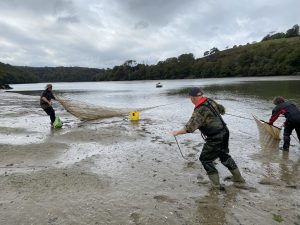
We’d very much like to encourage other groups to set up similar survey programmes in other parts of the Country; we’ve produced this short video with this in mind.
Water quality
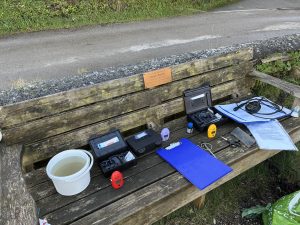
I’ve signed up for the Angling Trust’s Water Quality Monitoring Network for Estuaries. As well as helping in the campaign for cleaner rivers and estuaries, I’m hoping that the results from this increase our understanding of how water quality affects the number of juvenile bass we see in our surveys. Mind you, there’s quite a bit to get your head around when you start!
That’s all for now folks, thanks for reading, and good luck with your fishing.
Happy Easter,

Very interesting read Robin, you certainly are busy in your retirement. This is bound to be the year you catch an enormous bass on a creature bait in an estuary. The very best of luck.
Thanks Peter. I can only dream!
Great to know there’s organisations working in the back ground doing good work . I don’t fish the estuaries but there sertantly finding fish which didn’t happen much years ago .
Thanks Mike. I’ve only fished estuaries myself for the last 4 years, but I suspect bass were there long before that.
Morning mate, what do you mean by flow exactly? In my mind 🙂 dont most estuaries have a flow ?
Hi Jason. Yes they do to an extent, but I’m talking places where the current is particularly strong, such as at pinchpoints.
Ah yea fair enough